

Moon Mountain Wine Country Guide
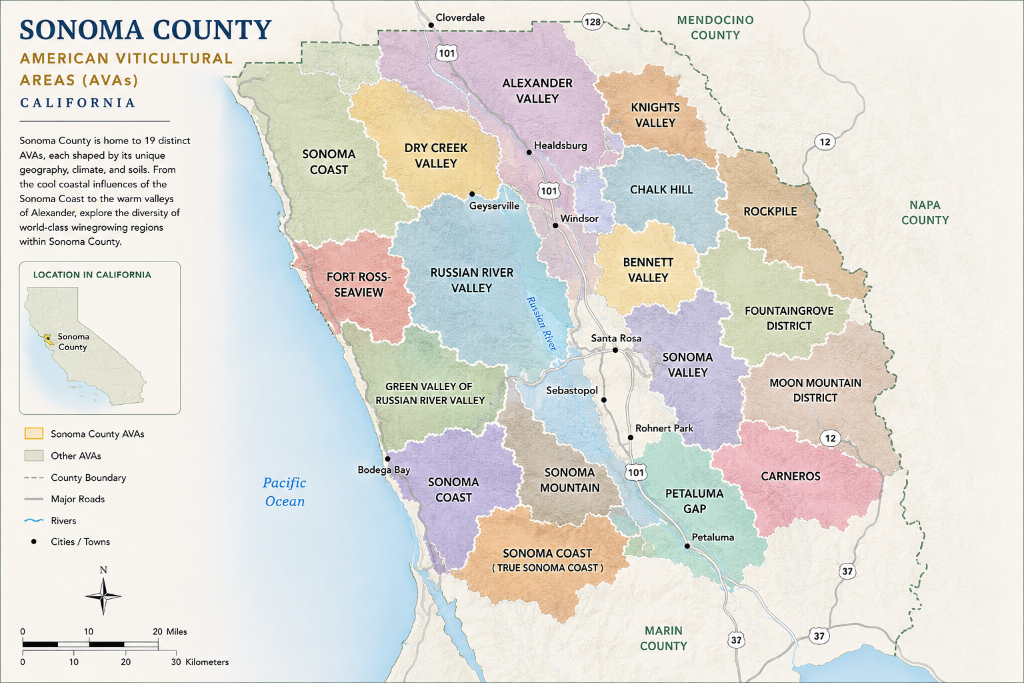
Moon Mountain District Sonoma County is a mountain AVA on the western slopes of the Mayacamas above the town of Sonoma. It is known for volcanic soils, elevated vineyards, and structured Cabernet Sauvignon, Zinfandel, Bordeaux-style blends, Syrah, and some Chardonnay.
At a Glance
Key facts about the Moon Mountain AVA.
AVAs with similar characteristics and wine styles.

About Moon Mountain
Moon Mountain District Sonoma County occupies the steep eastern side of Sonoma Valley, rising from roughly 400 feet to more than 2,000 feet on the western flank of the Mayacamas Mountains. The AVA sits above the town of Sonoma and west of the Napa County line, with vineyards scattered along narrow roads such as Moon Mountain Road and Cavedale Road. Compared with the Sonoma Valley floor, the terrain is more rugged, the vineyards are more separated, and the views often look west across Sonoma Valley toward the Sonoma Mountains.
Why Visit Moon Mountain?
Click to expand map
Why Moon Mountain Is One of California’s Most Famous Wine Regions
Signature Characteristics
What makes Moon Mountain special.
Mountain Cabernet Sauvignon
Cabernet Sauvignon from Moon Mountain is typically structured, dark-fruited, and tannic, with a firmer profile than many valley-floor Sonoma wines.
Volcanic Hillside Terrain
The AVA sits on rocky volcanic slopes of the Mayacamas Mountains, producing low-yielding vineyards and wines often marked by density, spice, and savory mineral tones.
Historic Red-Wine Vineyards
Sites such as Monte Rosso Vineyard have helped associate the district with old-vine Zinfandel, Cabernet Sauvignon, and other long-lived red wines.
Small-Scale Visitor Experience
Tasting is generally appointment-driven and dispersed, with fewer casual drop-in options than downtown Sonoma or the main Sonoma Valley corridor.
Towns & Areas
Charming towns near the Moon Mountain wine region.

Sonoma
The historic heart of California wine country, famous for its picturesque plaza, rich heritage, and exceptional wineries.

Glen Ellen
A historic village nestled in Sonoma Valley, celebrated for its natural beauty, wine tasting, and literary heritage.

Kenwood
A peaceful Sonoma Valley enclave known for boutique wineries, rolling vineyards, and stunning mountain scenery.
Compare Nearby AVAs
Moon Mountain is one of Sonoma County’s most celebrated wine regions. See how it compares to other nearby AVAs to help you choose the perfect destination for your wine country trip.
Moon Mountain
Famous ForCabernet Sauvignon, Zinfandel, Bordeaux Red Blend, Syrah, Chardonnay

Sonoma Mountain
Famous ForCabernet Sauvignon, Chardonnay, Pinot Noir, Zinfandel
Moon Mountain District is an elevation-based sub-AVA on the Mayacamas range known for its volcanic soils and tannic red wines. Sonoma Mountain is located on the western ridge of the Sonoma Valley and produces a mix of varietals influenced by its unique thermal belt and varying exposures.
Explore Sonoma MountainMoon Mountain
Famous ForCabernet Sauvignon, Zinfandel, Bordeaux Red Blend, Syrah, Chardonnay

Fountaingrove District
Famous ForCabernet Sauvignon, Syrah, Merlot, Sauvignon Blanc
Moon Mountain is defined by its high-elevation volcanic soils and steep slopes that yield concentrated, age-worthy red wines. Fountaingrove District encompasses the western foothills of the Mayacamas Mountains, producing diverse varietals influenced by both maritime breezes and inland heat.
Explore Fountaingrove DistrictMoon Mountain
Famous ForCabernet Sauvignon, Zinfandel, Bordeaux Red Blend, Syrah, Chardonnay

Knights Valley
Famous ForCabernet Sauvignon, Merlot, Sauvignon Blanc, Bordeaux Blends
Moon Mountain District features high-elevation vineyards on the Sonoma side of the Mayacamas Mountains that yield concentrated, tannic red wines. Knights Valley occupies a remote valley between the Alexander and Napa valleys, specializing in structured Bordeaux varietals grown in well-drained volcanic soils.
Explore Knights ValleyMoon Mountain
Famous ForCabernet Sauvignon, Zinfandel, Bordeaux Red Blend, Syrah, Chardonnay

Mount Veeder
Famous ForCabernet Sauvignon, Merlot, Malbec, Chardonnay
Moon Mountain sits on the western slopes of the Mayacamas Range and produces intense Cabernet Sauvignon and Zinfandel from volcanic soils. Mount Veeder occupies the eastern side of the same range and is known for some of the longest growing seasons in Napa Valley due to its high elevation and maritime influence.
Explore Mount VeederMoon Mountain
Famous ForCabernet Sauvignon, Zinfandel, Bordeaux Red Blend, Syrah, Chardonnay

Diamond Mountain District
Famous ForCabernet Sauvignon, Cabernet Franc, Merlot
Moon Mountain produces high-tannin wines from volcanic soils on the Sonoma side of the Mayacamas range. Diamond Mountain District yields concentrated, firm-structured Cabernet Sauvignon from steep terrain in the northern Napa Valley.
Explore Diamond Mountain DistrictMoon Mountain
Famous ForCabernet Sauvignon, Zinfandel, Bordeaux Red Blend, Syrah, Chardonnay

Howell Mountain
Famous ForCabernet Sauvignon, Merlot, Zinfandel
Moon Mountain is located on the Sonoma side of the Mayacamas Range and is characterized by volcanic soils that produce concentrated Cabernet Sauvignon and Zinfandel. Howell Mountain is an American Viticultural Area in Napa Valley situated entirely above the fog line, known for creating highly tannic and age-worthy red wines.
Explore Howell MountainCan’t decide? Explore all Sonoma County AVAs
Discover more wine regions and plan the perfect Sonoma County wine country adventure.
Featured Guides
Curated itineraries and travel guides for Moon Mountain.

Where to Find Sonoma County's Best Mocktails
Discover Sonoma County's most creative mocktails, from botanical zero-proof cocktails and elegant resort lounges to wineries, rooftop bars, and chef-driven restaurants redefining alcohol-free hospitality.
Travel Guide
Ultimate Sonoma Coast Getaway
Explore the best Sonoma Coast experiences for travelers who want rugged scenery, coastal lodging, cool-climate wines, outdoor adventure, and memorable local dining. This guide highlights the beaches, trails, wineries, restaurants, and places to stay that make the Sonoma Coast one of Northern California's most distinctive wine country escapes.
Multi-Day Itinerary
A Perfect Day at the Sonoma Plaza
Discover the best places around Sonoma Plaza for wine tasting, dining, history, and walkable wine country charm. This guide highlights tasting rooms, restaurants, historic landmarks, and nearby accommodations that make Sonoma Plaza one of California's most accessible and rewarding wine country destinations without needing a car.
Travel Guide
Authentic Sonoma County
Discover authentic Sonoma County experiences rooted in family-owned wineries, boutique producers, historic sites, artisan food makers, and the relaxed agricultural character that defines the region. This guide highlights places that showcase Sonoma County beyond polished wine country, from small-production tasting rooms and heritage farms to local cheese, olive oil, and cultural landmarks.
Travel Guide
Best Luxury Wine Experiences in Sonoma County
Explore Sonoma County's best luxury wine experiences, from acclaimed estates and collector-focused tastings to elegant wineries known for exceptional hospitality, vineyard settings, and limited-production wines. This guide is designed for travelers seeking polished, high-touch wine country experiences with a strong sense of exclusivity and regional prestige.
Travel GuidePlan Your Visit
Everything you need to know before visiting Moon Mountain.
Best Time to Visit
Spring & Fall
Transportation
Rental car, private driver, or organized wine tour recommended; Uber and Lyft can be limited or unreliable on mountain roads
Reservations
Recommended, and often required for estate or appointment-only tastings
Wineries Per Day
2-3
Where to Stay
Most visitors stay in the town of Sonoma, which offers hotels, inns, restaurants, and tasting rooms within a short drive of the AVA. Glen Ellen and Kenwood are also practical for a quieter Sonoma Valley base. There are limited lodging options within the mountain district itself, so staying on the valley floor is usually more convenient.
Moon Mountain FAQs
Common questions about visiting Moon Mountain.
What is the Moon Mountain District known for in the wine world?
Moon Mountain District is primarily famous for its high-altitude viticulture and rugged, volcanic soils. Located on the Sonoma side of the Mayacamas Mountains, this AVA is home to some of the oldest and most prestigious vineyards in California, most notably the legendary Monte Rosso Vineyard. Travelers visit this region to experience bold, structured red wines that benefit from intense sunlight and cooling maritime breezes. Unlike the valley floor, Moon Mountain offers a sense of wilderness and exclusivity, with many vineyards perched on steep slopes that provide breathtaking panoramic views of the Sonoma Valley, the San Francisco Bay, and on clear days, even the Pacific Ocean. It is a destination for those who appreciate the intersection of historic viticulture and dramatic natural beauty.
Where exactly is Moon Mountain located and how do I get there?
Moon Mountain is situated in the eastern hills of Sonoma County, California, directly above the town of Sonoma. It occupies the western slopes of the Mayacamas Mountain range, which acts as the natural border between Sonoma and Napa Valleys. To get there, most visitors start in the town of Sonoma and head east toward the foothills. Accessing the wineries often involves driving up winding, narrow mountain roads like Moon Mountain Road or Cavedale Road. Because of the rugged terrain and the private nature of many estates, it is highly recommended to use a professional driver or a GPS specifically programmed for the region, as cell service can be spotty once you begin your ascent into the higher elevations of the AVA.
What specific types of wine is Moon Mountain famous for?
The star of Moon Mountain is undoubtedly Cabernet Sauvignon. The high elevation and volcanic rock produce grapes with thick skins, resulting in wines with intense color, firm tannins, and deep mineral complexity. Beyond Cabernet, the region is world-renowned for its old-vine Zinfandel, particularly from heritage sites planted in the late 1800s. You will also find exceptional examples of Syrah, Merlot, and Cabernet Franc. While red wines dominate the landscape, some producers create unique, mountain-grown Chardonnay that offers a leaner, more mineral-driven profile compared to the buttery styles found in warmer valley locations. If you are a fan of structured, age-worthy reds with a distinct sense of place, Moon Mountain should be at the top of your Sonoma County itinerary.
Is Moon Mountain worth visiting compared to the Sonoma Valley floor?
Moon Mountain offers a completely different experience than the Sonoma Valley floor, making it well worth the visit for travelers seeking something beyond the standard tasting room. While the valley floor is known for its accessibility, charming plazas, and lush gardens, Moon Mountain is all about the 'mountain fruit' profile and dramatic vistas. The tasting experiences here are typically more intimate, private, and education-focused, often taking place directly in the vineyards or in caves carved into the hillside. It appeals to adventurous wine lovers who want to see the rugged side of California winemaking. If you enjoy sweeping views and small-production, high-end wines, the extra effort to climb the mountain provides a much more memorable and exclusive experience than staying in the main tourist hubs.
What are the best wineries to visit in the Moon Mountain District?
When planning a trip to Moon Mountain, a few iconic names stand out. Monte Rosso Vineyard is the crown jewel of the region; while it is a vineyard rather than a public tasting room, look for producers like Louis M. Martini or Orin Swift who source from it. For a dedicated on-site experience, Repris Wines offers incredible cave tours and ATVs rides through high-altitude blocks. Kamen Estate, owned by screenwriter Robert Mark Kamen, provides stunning views and exceptional Syrah and Cabernet. Other notable stops include B. Wise Vineyards, which features a world-class cave system, and Hanzell Vineyards, located on the lower slopes, famous for its historic Chardonnay and Pinot Noir. Because these are boutique operations, you should prioritize booking well in advance to secure a spot.
How does Moon Mountain compare to the Napa Valley across the ridge?
Moon Mountain is often called the 'Sonoma version' of Napa's famous mountain AVAs like Howell Mountain or Mount Veeder. While both regions share the Mayacamas range and produce powerful Cabernet Sauvignon, Moon Mountain tends to feel more rustic, secluded, and less commercialized than its Napa neighbors. Prices for tastings and bottles can be slightly more approachable in Moon Mountain, though they remain premium. The vibe is more 'boots-on-the-ground' farming rather than 'white-tablecloth' luxury. Visitors often find that Moon Mountain offers a similar level of wine quality and prestige as Napa, but with a quieter, more intimate atmosphere that allows for deeper conversations with winemakers and vineyard managers without the heavy crowds often found on the other side of the ridge.
How many wineries can I realistically visit in Moon Mountain in one day?
Due to the geography of the region, you should plan to visit no more than two wineries in a single day. Unlike the valley floor where wineries are clustered together, Moon Mountain estates are separated by winding, steep switchbacks that can take 20 to 30 minutes to navigate between properties. Furthermore, the tasting experiences in this AVA are designed to be leisurely and immersive, often lasting 90 minutes to two hours. Most visitors choose to do one mountain tasting in the morning, have a relaxed lunch in the town of Sonoma, and then visit a second mountain estate in the afternoon. Trying to rush through this region defeats the purpose of the tranquil, scenic environment that makes Moon Mountain so special.
Do I need to make reservations for wine tastings in Moon Mountain?
Yes, reservations are absolutely essential for almost every winery in the Moon Mountain District. Because of the remote locations and small-scale production, very few wineries in this AVA are open for walk-ins. Many operate under strict county permits that limit the number of guests allowed on the property each day. These appointments are often private or semi-private, ensuring you get dedicated attention from a wine educator. It is common for top-tier estates to book up several weeks or even months in advance, especially on weekends and during the peak harvest season from September through October. Always check the winery's website or call ahead to secure your tasting slot before you begin your drive up the mountain.
What is the best time of year to visit the Moon Mountain wine region?
The best time to visit Moon Mountain is during the late spring (May and June) or the early fall (September and October). In the spring, the hillsides are vibrant green, the wildflowers are in bloom, and the weather is mild enough for outdoor vineyard tours. Fall is equally spectacular as the grape harvest begins; the changing colors of the vine leaves against the red volcanic soil create a stunning visual palette, and the energy of the harvest is palpable. While summer offers beautiful clear views, it can become quite hot on the exposed mountain slopes, so early morning tastings are preferred. Winter can be peaceful and romantic, but heavy rains occasionally make the mountain roads more challenging to navigate for those unfamiliar with the terrain.
What town is closest to Moon Mountain and where should I stay?
The closest town to Moon Mountain is Sonoma, specifically the area around the historic Sonoma Plaza. Staying in Sonoma provides the perfect home base, as you are only a 10 to 15-minute drive from the base of the mountain. For a luxury experience, consider MacArthur Place Hotel & Spa or the Fairmont Sonoma Mission Inn, both of which offer high-end amenities and proximity to the region. For a more boutique feel, there are several charming inns and vacation rentals located right off the plaza. Staying in Sonoma also allows you to enjoy world-class dining and shopping within walking distance after you return from your mountain adventures, making for a well-rounded and convenient wine country vacation.
Is Moon Mountain a family-friendly destination for travelers with children?
Moon Mountain is generally not considered a family-friendly destination and is better suited for couples, groups of friends, or serious wine collectors. The nature of the visits—which often involve cliffside tours, deep wine caves, and lengthy, seated technical tastings—does not cater well to children or toddlers. Additionally, the rugged terrain and steep drop-offs at many estates present safety concerns for active kids. Most wineries in this district maintain an adult-oriented atmosphere to preserve the quiet, exclusive experience their guests expect. If you are traveling with a family, it is better to spend your time at the larger estates on the Sonoma Valley floor or in the Russian River Valley, which often feature picnic areas and more casual environments.
What other wine regions can I combine with a visit to Moon Mountain?
Moon Mountain is perfectly positioned for a multi-AVA itinerary. Since it sits directly above the Sonoma Valley AVA, you can easily combine a morning mountain tasting with an afternoon visit to a valley floor estate like Chateau St. Jean or Buena Vista. It is also a short drive from the Carneros region to the south, which is famous for Pinot Noir and Sparkling wine. If you are willing to drive about 30 to 45 minutes, you can cross over the Mayacamas into the Napa Valley, specifically the Oakville or St. Helena sub-regions. Combining Moon Mountain with these neighboring areas allows you to compare different terroirs and wine styles, from the delicate cool-climate whites of Carneros to the powerful, sun-drenched reds of the mountains.
What should I wear for a day of wine tasting in Moon Mountain?
When visiting Moon Mountain, 'Wine Country Casual' is the standard, but with a few practical adjustments for the terrain. You should wear sturdy, comfortable shoes—ideally closed-toe—as many tours involve walking through uneven vineyard rows or damp wine caves. Avoid high heels, as the ground is often gravelly or steep. Dress in layers; while it may be warm and sunny on the mountain peaks, the temperature drops significantly inside the caves and can be quite cool in the mornings due to the elevation. A light jacket or sweater is a must. Sunglasses and sunscreen are also highly recommended, as the sun at higher altitudes is much more intense than it is on the valley floor.
What makes the visitor experience in Moon Mountain different from other regions?
The visitor experience in Moon Mountain is defined by a sense of adventure and personal connection. Because these wineries are tucked away on private estates rather than busy highways, the atmosphere is incredibly quiet and serene. You aren't just standing at a bar; you are often sitting on a terrace overlooking the world or walking the very rows where the grapes were grown. The educators are usually deeply knowledgeable about geology and viticulture, providing a more 'behind-the-scenes' look at winemaking. It feels less like a tourist attraction and more like an invitation into a private mountain sanctuary. For travelers who find large, crowded tasting rooms overwhelming, the peaceful and elevated environment of Moon Mountain is a breath of fresh air.
Explore More Regions
View all regionsAdelaida District
The Adelaida District is a high-elevation AVA in northwest Paso Robles defined by its rugged Santa Lucia Range terrain, calcareous limestone soils, and significant maritime influence.
Alisos Canyon
Alisos Canyon is a 5,774-acre AVA in Santa Barbara County, established in 2020. It is defined by its position between the Santa Maria Valley and the Santa Ynez Valley, specializing in concentrated Syrah and Rhone-style wines grown on sandstone and shale soils.

Atlas Peak
Atlas Peak is a high-elevation Napa Valley AVA on the western slopes of the Vaca Range, east of the city of Napa. It is best known for mountain-grown Cabernet Sauvignon from volcanic, well-drained sites above much of the valley fog.
Ballard Canyon
Ballard Canyon is a small, north-south oriented AVA in the Santa Ynez Valley of Santa Barbara County. It is specifically recognized for its focus on Syrah and other Rhône varieties grown in a transitional climate.

Calistoga
Calistoga is Napa Valley’s northernmost AVA, centered on the town of Calistoga and shaped by a warm valley-floor climate with strong nighttime cooling. It is best known for structured Cabernet Sauvignon, ripe Zinfandel, and smaller plantings of Syrah, Petite Sirah, and Charbono.

Carneros
Los Carneros is the cool, bay-influenced AVA at the southern end of Napa and Sonoma, known for Chardonnay, Pinot Noir, and sparkling wine. Fog, wind, and a long growing season give its wines higher acidity and more restrained fruit than much of inland Napa Valley.

Chiles Valley District
Chiles Valley District is a small, rural AVA in the eastern hills of Napa Valley, known mainly for Cabernet Sauvignon, Zinfandel, and other mountain-influenced red wines. Its higher elevation, cooler nights, and relative isolation distinguish it from the warmer, more developed Napa Valley floor.

Coombsville
Coombsville is a cool, maritime-influenced Napa Valley AVA east of the city of Napa, best known for Cabernet Sauvignon and Bordeaux varieties with freshness, structure, and restrained fruit. Its rolling volcanic hills and proximity to San Pablo Bay distinguish it from warmer up-valley Cabernet districts.

Curated by Wine Country Experts
Our guides are written by local wine experts and updated regularly to ensure you get the most accurate and helpful information for your wine country adventure.
Guest Reviews
We analyze thousands of verified guest reviews to understand real experiences and consistent satisfaction.
Booking Popularity
We evaluate booking and reservation trends to spot the most sought-after places and experiences.
Regional Significance
We prioritize businesses that represent the unique character, heritage, and communities of Sonoma County.
Wine Quality
Our team looks for outstanding wine programs, high-quality offerings, and recognition from trusted industry sources.
Local Expert Recommendations
Our local experts personally visit and vet each recommendation to ensure it meets our standards.
Trusted. Local. Unbiased.
We do not accept payment from businesses for placement. Our recommendations are independent and always focused on helping you have exceptional wine country experiences.